
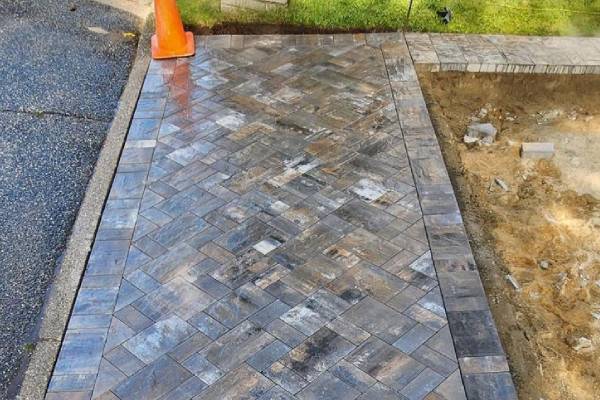
Front walkway construction in Medford, NY requires more than pouring concrete and calling it done. Long Island sits in USDA Hardiness Zone 7a with a frost depth that reaches 42 inches in Suffolk County. That means every walkway material, every base layer, and every joint detail has to account for freeze-thaw cycles that can heave, crack, or shift poorly built paths within a few seasons. The right front walkway adds curb appeal, increases home value, and gives your family a safe, level surface from the driveway or sidewalk to your front door, rain or snow.
This guide breaks down the materials, base construction, drainage, permitting, and maintenance that go into building a front walkway that lasts on Long Island. Whether you are replacing a cracked concrete path or building from scratch on a new Medford property, the details here will help you make an informed decision before requesting estimates.
Why Front Walkway Construction Matters More Than Most Homeowners Realize
A front walkway is the first thing visitors, mail carriers, and potential buyers use when they approach your home. According to the National Association of Realtors, well-designed hardscaping ranks among the top outdoor improvements for recovering project costs at resale. On Long Island, where curb appeal directly affects listing competition in towns like Medford, Patchogue, and Centereach, a deteriorating front walk sends the wrong message before anyone steps inside.
Beyond appearance, a walkway that settles unevenly or develops cracks becomes a trip hazard, especially during winter when ice fills gaps and low spots collect meltwater. Replacing or upgrading a front walkway is one of the most practical investments a Medford homeowner can make, because it serves both daily safety and long-term property value.
Walkway Materials Compared for Long Island’s Freeze-Thaw Climate
Not every walkway material performs equally in Suffolk County’s four-season weather. Here is how the most common options hold up on Long Island.
Concrete Pavers
Concrete pavers are the most popular walkway material on Long Island for good reason. They are manufactured to consistent dimensions, come in dozens of colors and patterns, and individual units can be replaced without tearing out the entire walk. Because pavers are segmented, the joints between them allow slight movement during freeze-thaw cycles without cracking the surface. Interlocking pavers add structural stability and resist shifting under foot traffic. A well-built paver walkway with a proper base lasts 25 to 30 years or longer with basic maintenance.
Natural Bluestone
Bluestone is a Long Island classic. Quarried from the Catskill region of New York, it offers a natural appearance that complements Colonial, Cape Cod, and farmhouse-style homes common throughout Medford and surrounding Suffolk County neighborhoods. Thermal-finished bluestone provides a non-slip surface, while irregular (natural cleft) bluestone creates a more rustic look. Bluestone is dense and weather-resistant, so it handles freeze-thaw well when set on a compacted base with proper drainage. Expect a lifespan of 40 years or more.
Brick
Clay brick walkways deliver a traditional appearance that pairs well with older Long Island homes. Brick holds color over time without fading the way some concrete pavers can, and it develops a natural patina that many homeowners prefer. The main concern with brick on Long Island is that softer grades can absorb water and spall (flake) during hard freezes. Specifying severe-weather-rated brick (ASTM C902 Class SX) prevents this. Properly installed brick walkways last 25 to 40 years.
Poured Concrete
Poured concrete is the most affordable option upfront, and it creates a clean, uniform surface. The tradeoff on Long Island is that concrete is rigid. Without adequate control joints, a concrete walkway will crack as the ground shifts with frost heave. Decorative options like stamped or broom-finished concrete improve traction and appearance, but stamped surfaces need periodic resealing to maintain the pattern. A concrete walkway with proper reinforcement and an air-entrained mix can last 20 to 30 years in Suffolk County’s climate.
Natural Flagstone
Flagstone, whether Pennsylvania bluestone, quartzite, or slate, gives a front walkway a natural, high-end look. Irregular shapes are set in a mortar bed or on compacted stone dust, and the finished surface blends with garden beds, stone walls, and landscaped borders. Flagstone is heavy and durable, but mortar joints can crack in freeze-thaw conditions and may need repointing every 8 to 12 years. Dry-set flagstone on a gravel base avoids mortar issues entirely and allows for easier leveling if settling occurs.
Base Construction: The Part You Cannot See That Determines How Long Your Walkway Lasts
Every competitor page we reviewed mentions “proper preparation,” but few explain what that actually means on Long Island. Here is what goes into a walkway base built for Suffolk County’s soil and frost conditions.
Medford sits on glacial outwash soil, a mix of sand and gravel left behind by retreating ice sheets. This drains better than the clay soils found in other parts of the Northeast, which is an advantage. However, pockets of silt and organic material can hold water and cause localized heaving. A qualified contractor tests the subgrade before building.
The standard base for a residential walkway on Long Island is 6 to 8 inches of compacted 3/4-inch processed gravel (also called crusher run or dense-grade aggregate). This layer is installed in lifts, meaning it is spread in 2 to 3-inch layers and compacted with a plate compactor between each lift. Skipping this step, or compacting in one thick layer, leaves voids that settle over time.
On top of the gravel base, a 1-inch layer of coarse concrete sand or stone screenings is screeded level. This bedding layer allows minor adjustments during installation and helps distribute weight evenly across the pavers or stone. Edge restraints, typically aluminum or heavy-duty plastic spikes anchored into the gravel base, keep the walkway from spreading outward over time.
Walkway Width, Slope, and Drainage for Medford Properties
Front walkway width is one of the most overlooked details in residential construction. A walkway narrower than 4 feet forces visitors to walk single file and feels cramped next to a landscaped yard. The standard recommendation for a primary front walkway is 4 to 5 feet wide, which allows two people to walk comfortably side by side. If your front entrance includes columns, planters, or a wide stoop, a 5 to 6-foot walkway creates better visual proportion.
Drainage matters just as much as width. A front walkway should slope away from the house at a minimum pitch of 1/4 inch per foot. This sends rainwater and snowmelt toward the lawn or a drainage channel rather than pooling against the foundation. On flat Medford lots, where standing water is common after heavy rain, a properly graded walkway prevents the ice buildup that makes winter walks dangerous.
For properties where grading is tight, a cross-slope (pitching the walkway slightly to one side) combined with a strip drain or gravel border keeps water moving without redirecting it toward a neighbor’s property.
Permeable Walkway Options for Stormwater Management
Suffolk County has adopted stormwater management guidelines that encourage reducing impervious surface coverage on residential lots. Permeable pavers, which allow rainwater to filter through the joints and into a stone reservoir base beneath, offer a practical solution for front walkways.
Permeable paver systems use an open-graded aggregate base (clean, angular stone with no fines) instead of the traditional dense-grade base. Water passes through the paver joints, filters through the stone layers, and infiltrates into the soil below. This reduces runoff, recharges groundwater, and can make permitting easier on properties that are close to impervious coverage limits.
Not every Medford lot needs a permeable walkway, but for homeowners building new hardscape on properties with limited drainage or existing coverage near the town threshold, permeable pavers are worth discussing with your contractor.
Walkway Lighting and Winter Safety
Long Island winters mean short days and frequent precipitation. A front walkway without lighting is a liability from November through March. Low-voltage LED path lights installed along the walkway edges provide visibility without high energy costs. Recessed step lights built into risers where the walkway meets stoops or steps illuminate transitions that are easy to miss in the dark.
Hardwired low-voltage systems connected to a transformer are more reliable than solar-powered lights, which struggle during cloudy stretches common on Long Island in winter. If your walkway includes steps or grade changes, lighting is not decorative. It is a safety feature.
Connecting Your Walkway to Stoops, Steps, and Driveways
A walkway does not exist in isolation. It meets the front stoop, connects to the driveway, and sometimes wraps around to a side entrance or backyard patio. These transition points are where most walkway failures happen. A gap between the walkway and stoop collects water, freezes, and creates a trip edge. A walkway that meets the driveway at a different height invites cracking at the joint.
The solution is building walkway transitions as part of the same project. When the walkway, stoop, and steps share the same base and are graded together, the joints stay tight and the surfaces stay level. If you are building a new front walkway in Medford, this is the time to address an aging stoop, uneven front steps, or a crumbling driveway apron rather than patching them separately later.
Islandwide Paving and Masonry builds walkways, stoops and steps, and patios as coordinated projects so every surface connects cleanly and drains properly.
Building Around Trees Without Causing Root Damage
Medford properties often have mature oaks, maples, and other shade trees near the front yard. Routing a walkway too close to a large tree risks cutting surface roots during excavation, which can stress or kill the tree. Roots that are left intact under a rigid walkway will eventually push the surface up and crack it.
The best approach is planning the walkway path to give large trees at least 4 to 6 feet of clearance from the trunk. Where that is not possible, dry-set pavers or flagstone on a gravel base flex with minor root growth better than poured concrete. In some cases, raising the walkway slightly and using a thinner base profile in the tree’s root zone reduces excavation depth and limits root disturbance.
Suffolk County Permits for Front Walkway Construction
Medford is an unincorporated hamlet in the Town of Brookhaven. Most residential walkway projects in Brookhaven do not require a building permit because walkways are not structural. However, if the project changes the grading or drainage pattern on your lot, adds significant impervious surface, or is located near a wetland or watercourse, the Town of Brookhaven Building Division may require a review.
Properties within the Long Island Pine Barrens Preserve core area or compatible growth zones have additional restrictions on ground disturbance and impervious coverage. A contractor experienced in Medford and surrounding Brookhaven hamlets will know whether your project triggers a review and can handle the paperwork.
Walkway Maintenance by Material
Every walkway material requires some level of upkeep. Here is what to expect on Long Island.
Concrete pavers: Sweep joints and re-apply polymeric sand every 3 to 5 years. Power wash annually to remove algae and staining. Replace individual shifted or cracked pavers as needed without disturbing the rest of the walk.
Bluestone: Sweep debris regularly. Re-point mortar joints every 8 to 12 years if mortar-set. Dry-set bluestone needs periodic re-leveling of individual stones and joint sand replenishment.
Brick: Inspect for spalling each spring. Replace damaged bricks before water penetrates the base. Re-sand joints every 2 to 4 years.
Poured concrete: Seal control joints with flexible caulk every 2 to 3 years to prevent water infiltration. Reseal stamped concrete every 2 to 3 years. Patch small cracks before they widen.
Flagstone: Re-level shifted stones as needed. Repoint mortar joints every 8 to 12 years. For dry-set flagstone, brush stone dust into joints annually.
When Is the Best Season to Build a Walkway on Long Island?
The ideal window for walkway construction on Long Island runs from April through November. Spring and early summer are popular because homeowners want projects finished before outdoor entertaining season. Fall is equally good because cooler temperatures are easier on crews and materials like polymeric sand cure well in moderate heat.
Poured concrete should not be placed when nighttime temperatures drop below 40 degrees Fahrenheit, because cold weather slows curing and weakens the finished slab. Paver and stone installations can continue later into fall since they do not depend on curing, but frozen ground makes excavation difficult and compaction less reliable.
Booking in late winter or early spring often means shorter wait times and earlier start dates.
Why Islandwide Paving and Masonry Is Medford’s Choice for Front Walkway Construction
Islandwide Paving and Masonry is based in Medford, NY. That is not a service area pin on a map. It is where the crew lives, works, and builds. Every walkway project starts with a free on-site consultation where the team evaluates your soil, grading, drainage, and the condition of your existing stoop and driveway so the new walkway connects to everything around it.
The company is licensed and insured, handles projects from single front walkways to full hardscape renovations, and uses the same crew from estimate through final cleanup. Whether the project calls for concrete pavers, bluestone, brick, or a combination of materials, the base preparation, edge restraint, and drainage detailing follow the same standards that keep walkways level and crack-free through Long Island winters.
Ready to replace a cracked path or build a walkway that matches your home? Request a free estimate or call (631) 710-1995.
Frequently Asked Questions About Front Walkway Construction in Medford, NY
Do I need a permit for a front walkway in Medford, NY?
Most residential walkway projects in Medford do not require a building permit from the Town of Brookhaven. However, projects that significantly increase impervious surface coverage, alter lot drainage, or fall within the Pine Barrens Preserve zone may need a review. Your contractor should confirm permit requirements before construction begins.
What is the best walkway material for Long Island winters?
Concrete pavers and natural bluestone handle Long Island’s freeze-thaw cycles best because their segmented joints flex with ground movement instead of cracking. Poured concrete works if properly reinforced and jointed, but it is more prone to cracking over time. Brick performs well when you specify severe-weather-rated units (ASTM C902 Class SX).
How wide should a front walkway be for safety and resale?
A primary front walkway should be at least 4 feet wide, with 5 feet recommended so two people can walk side by side comfortably. Wider walkways of 5 to 6 feet improve curb appeal and make a home feel more welcoming, which is a factor buyers notice during showings.
Can a walkway be built around existing trees without root damage?
Yes, with proper planning. The walkway path should give large trees 4 to 6 feet of clearance from the trunk. Where clearance is tight, using a thinner base profile or dry-set pavers over gravel reduces excavation depth and limits root disturbance. Cutting major surface roots should be avoided because it can stress the tree and lead to future heaving.
How does walkway construction connect to existing stoops and steps?
The walkway should meet the stoop at the same elevation with a tight, sealed joint. Building the walkway and stoop work as one coordinated project ensures proper grading and drainage across the transition. Gaps between a walkway and stoop collect water, freeze, and create trip hazards.
What base depth do walkways need on Long Island?
A standard residential walkway on Long Island needs 6 to 8 inches of compacted 3/4-inch processed gravel installed in lifts, topped with 1 inch of leveling sand or stone screenings. This base depth accounts for Suffolk County’s frost depth and glacial outwash soil conditions.
How long does a front walkway last on Long Island?
Concrete pavers last 25 to 30 years or longer. Natural bluestone lasts 40 years or more. Brick walkways last 25 to 40 years with freeze-rated units. Poured concrete lasts 20 to 30 years with proper reinforcement. All lifespans assume correct base preparation and routine maintenance.
Should I add lighting to my front walkway?
Yes, especially on Long Island where winter daylight is limited. Low-voltage LED path lights along the walkway edges and recessed step lights at grade changes improve safety and visibility. Hardwired systems are more reliable than solar lights during Long Island’s cloudy winter months.
Can I combine different materials in one walkway?
Combining materials is a popular design approach. A bluestone field with a brick border, or concrete pavers with a natural stone accent band, adds visual interest and helps define the walkway edges. The key is making sure both materials sit on the same base and are set at the same height to avoid trip points.
What happens to my lawn during walkway construction?
Crews excavate the walkway path, which removes a strip of lawn. Adjacent grass may experience minor compaction from equipment. After installation, edges are backfilled and graded flush with the surrounding lawn. Seed or sod is applied to bare areas. Most lawns recover fully within one growing season.
When is the best time to build a walkway on Long Island?
The best window is April through November. Spring and early summer are popular for finishing before outdoor season. Fall works well for paver and stone projects since cooler temperatures are comfortable for crews and ideal for curing polymeric sand. Poured concrete should be placed when nighttime temperatures stay above 40 degrees Fahrenheit.
How do I maintain my walkway after installation?
Pavers need polymeric sand replenishment every 3 to 5 years and annual power washing. Bluestone and brick need joint re-pointing every 8 to 12 years. Poured concrete needs control joint resealing every 2 to 3 years. All walkway types benefit from sweeping debris regularly and addressing cracks or shifted units before water penetrates the base.