If you are searching for patio contractors in Medford NY, you have probably noticed that most of the results are for companies in Medford, Oregon, Medford, Massachusetts, or Medford, New Jersey. That alone tells you something important: there is a real gap in the market for experienced, local patio installation on Long Island’s south shore. Finding a contractor who actually understands Medford’s soil, frost conditions, and municipal requirements is not as simple as picking the first name on a search page.
This guide breaks down everything a Medford homeowner needs to know before hiring a patio contractor, from material choices and frost line engineering to realistic costs and the questions most contractors hope you never ask. Whether you are building a brand new outdoor living space or replacing a cracked concrete slab that did not survive last winter, the details here will help you make a decision you will not regret in three years.
Why Medford NY Patio Installation Is Different from Other Parts of the Country
Medford sits in the Town of Brookhaven in Suffolk County, Long Island. That geography creates specific challenges that contractors from outside the area often underestimate. The frost line here reaches 42 inches, one of the deepest on the East Coast. That means the ground beneath your patio freezes and thaws aggressively every winter, and any base that is not engineered for that movement will push pavers out of level, crack concrete slabs, and create trip hazards within a few seasons.
The soil composition in Medford and the surrounding communities, including Patchogue, Coram, and Centereach, is a mix of sandy loam and clay deposits left behind by glacial activity. Sandy soil drains well but lacks stability for heavy loads. Clay pockets hold water and expand when frozen. A patio contractor who works locally knows where these soil transitions happen and builds the sub-base accordingly. A contractor driving in from outside Suffolk County is guessing.
Drainage is another factor that separates Long Island patio work from installations in drier climates. With average annual rainfall around 48 inches in Suffolk County and a high water table in parts of Medford, stormwater management is not optional. Your patio needs to be graded away from the house foundation at a minimum slope of 1/4 inch per foot, and in many cases, a French drain or dry well system is necessary to prevent ponding.
Paver Materials That Hold Up on Long Island
The material you choose for your patio determines how it looks, how long it lasts, and how much maintenance it demands. Here is a realistic comparison of what works in Medford’s climate.
Interlocking concrete pavers are the most commonly installed patio material on Long Island, and for good reason. Brands like Cambridge, Nicolock, Techo-Bloc, Belgard, and Unilock manufacture pavers specifically rated for northeastern freeze-thaw conditions. Individual pavers flex with minor ground movement instead of cracking like a monolithic slab. If one paver chips or stains, you pull it out and drop in a replacement. Cambridge Pavingstones, headquartered right here on Long Island in Lynbrook, is a local manufacturer that many Suffolk County contractors prefer for availability and warranty support.
Natural stone, particularly bluestone and Connecticut flagstone, gives a patio a distinctive, high-end appearance. Bluestone handles Long Island weather well but costs significantly more than concrete pavers, typically $18 to $30 per square foot installed versus $12 to $22 for concrete pavers. Natural stone also requires more precise installation because each piece is irregular, and the joints need careful attention to prevent shifting.
Poured concrete is the least expensive option upfront, usually $8 to $14 per square foot installed. The tradeoff is durability. Poured concrete patios in the Medford area frequently develop cracks within 3 to 5 years because the freeze-thaw cycle works against a single continuous slab. Repairs involve cutting out the damaged section and patching, which rarely matches the original surface. For this reason, most experienced Long Island patio contractors steer homeowners toward pavers unless budget is the primary concern.
Porcelain pavers are a newer option gaining traction in Suffolk County. They are thinner than concrete pavers, extremely dense, and almost zero-absorption, which makes them highly resistant to frost damage and staining. The downside is cost, usually $25 to $40 per square foot installed, and they require a very precise, level base because there is less room for adjustment.
What a Proper Patio Sub-Base Looks Like in Medford
The sub-base is the most important part of any patio installation, and it is the part you cannot see once the job is finished. That makes it the easiest thing for a contractor to cut corners on. Here is what a proper patio base looks like for Medford’s conditions.
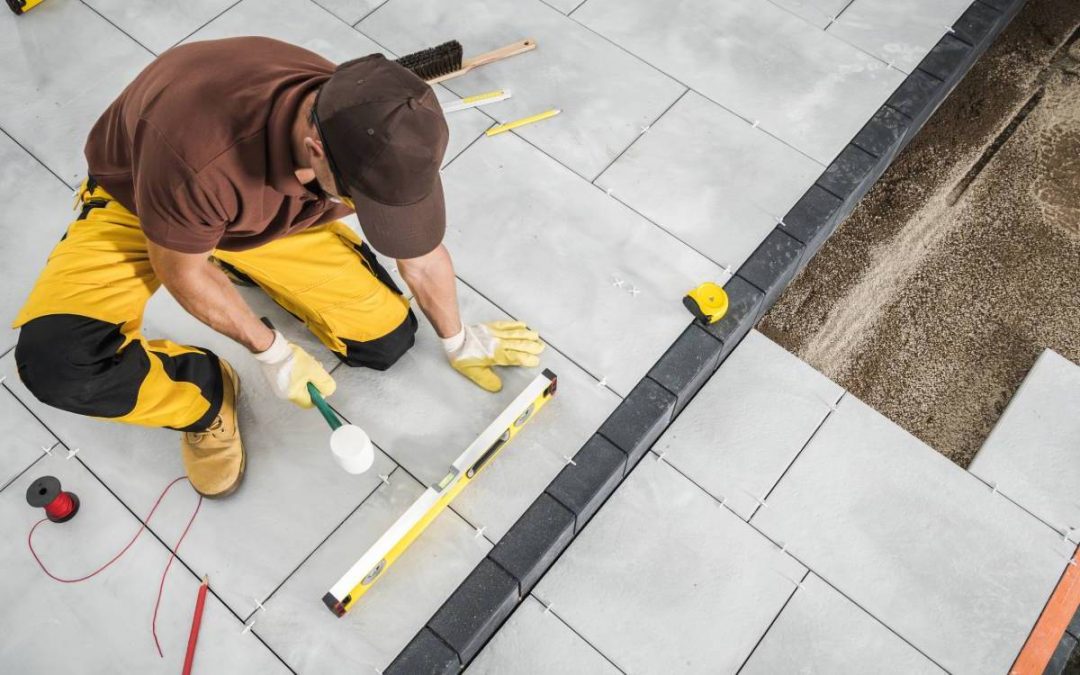
First, the existing soil is excavated to a depth of 8 to 12 inches depending on soil type. In areas with heavy clay content, the excavation goes deeper. The excavated area is then filled with 6 to 8 inches of recycled crushed aggregate (RCA) or process gravel, compacted in 2-inch lifts using a plate compactor. Each lift is compacted before the next layer is added. This process creates a stable, load-bearing foundation that distributes weight evenly and allows water to drain through rather than pooling beneath the pavers.
On top of the compacted aggregate goes a 1-inch layer of bedding sand, screeded to a precise, even surface. The pavers are set into this sand layer, and once all the pavers are in place, polymeric sand is swept into the joints and activated with water. The polymeric sand hardens slightly and locks the pavers together while still allowing minor flex.
Edge restraints, either aluminum or heavy-duty plastic, are staked along the perimeter to prevent the pavers from shifting outward over time. Skipping edge restraints is a common shortcut that leads to pavers spreading apart within the first year.
If your patio contractor does not walk you through this process before starting work, ask. If they cannot explain their base preparation in detail, that is a strong signal to keep looking.
How Much a Patio Costs in Medford NY: Real Numbers
Pricing for patio installation in Medford varies based on size, material, site conditions, and design complexity. Here are realistic ranges based on current Long Island market pricing.
A basic 200-square-foot paver patio with a standard running bond or herringbone pattern, a 6-inch compacted sub-base, and polymeric sand joints typically costs $4,500 to $6,500 installed. That includes excavation, base prep, pavers, edge restraints, and cleanup.
A mid-range patio of 300 to 400 square feet with a more complex pattern, a border detail, and possibly a small sitting wall runs $7,000 to $11,000. Adding a fire pit, built-in grill pad, or step-down design increases the cost further.
Large-scale outdoor living projects, 500 square feet and up with retaining walls, outdoor kitchens, pergolas, or multi-level designs, typically start around $12,000 and can reach $25,000 or more depending on scope.
A few cost factors specific to Medford and Suffolk County: if your lot has heavy clay soil that requires over-excavation, add $500 to $1,500. If the site slopes toward the house and needs re-grading or a drainage system, add $1,000 to $3,000. If the existing patio or slab needs to be demolished and removed, demolition runs $3 to $5 per square foot.
Be cautious with quotes that come in significantly below these ranges. The most common way to lower a patio bid is to reduce the sub-base thickness, use cheaper aggregate, or skip the compaction process entirely. That lower price buys you a patio that looks great on day one and starts failing by year two.
Drainage Engineering: The Step Most Contractors Skip
Drainage is where patio installations most frequently go wrong on Long Island. Suffolk County’s water table can be surprisingly high in parts of Medford, and the combination of relatively flat terrain and 48 inches of annual rainfall means water management has to be planned, not improvised.
A properly graded patio directs water away from the house at a slope of at least 1/4 inch per foot. For a 20-foot-deep patio, that means the far edge sits 5 inches lower than the edge against the house. This grade is built into the sub-base, not created by tilting the pavers on top of a flat base.
In situations where the yard grade does not allow surface drainage away from the patio (for example, when the patio is surrounded by higher ground on two or more sides), a channel drain or French drain system is necessary. These systems collect water at the low point and pipe it to a dry well, which is essentially a buried gravel pit that allows stormwater to percolate into the ground slowly.
Long Island’s sandy subsoil actually makes dry wells very effective here compared to areas with heavy clay. A properly sized dry well for a residential patio is typically 3 feet in diameter and 3 to 4 feet deep, filled with clean gravel and wrapped in filter fabric. Some contractors install prefabricated dry well chambers from brands like NDS or Flo-Well, which are faster to install and provide more storage volume.
Permits, Setbacks, and HOA Rules in Medford
Patio permit requirements in Medford fall under the Town of Brookhaven building department. For a standard ground-level patio that is not attached to the house, a building permit is generally not required. However, there are important exceptions.
If your patio design includes a raised platform, a roofed structure like a pergola, electrical wiring for lighting or an outdoor kitchen, or plumbing for a sink or gas line, a permit is almost certainly required. Retaining walls over 4 feet in height also trigger permit requirements and may need an engineer’s stamp.
Setback requirements apply regardless of whether a permit is needed. In most residential zones in Medford, structures must be set back at least 5 feet from the side property line and 10 feet from the rear property line. Your contractor should verify your specific zoning district before starting, since setbacks vary by zone. The Town of Brookhaven Building Division can confirm requirements for your specific lot.
If you live in a community with a homeowners association, check the HOA rules before finalizing your design. Some associations in the Medford area restrict patio materials, colors, or sizes. Getting approval in writing before construction prevents expensive disputes after the fact.
How to Evaluate Patio Contractors in Medford NY
Not every company advertising patio work in Medford is equally qualified. Here is a practical checklist for evaluating contractors before you sign anything.
Suffolk County HIC license. Any contractor performing home improvement work in Suffolk County must hold a valid Home Improvement Contractor license issued by the county. Ask for the license number and verify it through the Suffolk County Department of Consumer Affairs. Unlicensed work is not just risky, it is illegal, and it voids most manufacturer warranties on the materials.
Insurance verification. Request a current certificate of liability insurance and workers’ compensation coverage. Call the insurance company directly to confirm the policy is active. If a worker is injured on your property and the contractor does not carry workers’ comp, you may be liable.
Written scope of work. A legitimate estimate spells out the sub-base depth and material, paver brand and model, pattern, edge restraint type, drainage plan, and warranty terms. If the estimate is a single line item that says “install patio” with a price, that is not an estimate. That is a guess.
Local project photos. Ask to see completed projects in Medford or nearby Suffolk County communities. Photos from projects in other states or generic stock images tell you nothing about the contractor’s local experience. Even better, ask for addresses of recent projects you can drive by.
Warranty details. Most reputable patio contractors offer a 2 to 5 year warranty on workmanship. The paver manufacturer provides a separate warranty on the product itself, often 25 years or lifetime for structural integrity. Make sure you understand what each warranty covers and what it excludes.
Why Islandwide Paving Is the Right Choice for Medford Patio Work
Islandwide Paving brings the same engineering-first approach to patio installation that has built their reputation across Long Island for asphalt driveways and commercial paving. Every patio project starts with a site evaluation that includes soil assessment, drainage analysis, and a detailed written scope of work before any material is ordered.
What sets Islandwide Paving apart from general contractors who add patios to their service list is the depth of experience with sub-base engineering. A company that has built commercial parking lots and high-traffic driveways across Suffolk County understands compaction, load distribution, and drainage at a level that a landscaper or handyman simply does not.
Islandwide Paving works with all major paver brands available on Long Island, including Cambridge, Nicolock, Techo-Bloc, Belgard, and Unilock. They do not push a single brand because they carry inventory. Instead, they recommend the material that fits your design, budget, and site conditions. Every installation includes full-depth excavation, compacted RCA sub-base, screeded bedding sand, polymeric joint sand, and proper edge restraints.
As a Suffolk County licensed and insured contractor, Islandwide Paving provides free on-site estimates with a written scope that details every layer of the installation. If you are comparing patio contractors in Medford, start with a company that will explain exactly what is going into the ground before they ask you to sign.
Planning Your Patio Project: Timeline and Best Season
The best time to install a patio in Medford is between April and November, when ground temperatures allow proper compaction and polymeric sand needs warm weather to cure. Most homeowners start planning in late winter and schedule installation for spring or early summer. If you want your patio ready for summer entertaining, reaching out to contractors in February or March gives you the best chance of getting on the schedule.
A typical residential patio takes 3 to 7 days from excavation to final cleanup. Smaller, straightforward projects with good site access can be completed in as few as 3 days. Larger projects with drainage systems, retaining walls, or complex designs take 7 to 10 days. Weather delays can extend the timeline, particularly during Long Island’s rainy spring months.
One scheduling note: fall installations (September through early November) are often easier to book and sometimes come at slightly lower prices because demand slows after Labor Day. As long as the project is completed before the first hard freeze, a fall installation performs identically to a spring one.
Patio Design Ideas That Work for Medford Backyards
Medford lots typically range from 1/4 acre to 1/2 acre, which gives most homeowners enough room for a functional outdoor living space without overtaking the entire yard. Here are design approaches that work well for the area.
A fire pit patio is one of the most requested designs in Suffolk County. A circular or square fire pit set into a paver patio with a surrounding seating wall extends outdoor use well into October and November. Many homeowners pair a fire pit with a 300 to 400 square-foot patio, creating a gathering space that works for both small family evenings and larger get-togethers.
An outdoor kitchen patio requires more planning, including gas line routing, electrical for lighting and outlets, and potentially plumbing for a sink. The patio footprint for a functional outdoor kitchen usually starts at 250 square feet just for the cooking and prep area, plus additional space for dining. This type of project typically requires a building permit from the Town of Brookhaven.
A multi-level patio works especially well on lots with a natural grade change. Instead of fighting the slope with heavy grading, the patio steps down in sections connected by paver steps. This adds visual interest and can create distinct zones for cooking, dining, and lounging.
For homeowners looking for patio design inspiration specific to Medford NY, starting with your lot dimensions and intended use narrows the options quickly. A good contractor will produce a scaled layout drawing before construction begins so you can see how the finished patio relates to your house, yard, and property lines.
Common Patio Installation Mistakes on Long Island
After years of patio work across Suffolk County, certain installation mistakes come up repeatedly. Knowing what they are helps you spot them before they become your problem.
Thin sub-base. The single most common shortcut is reducing the compacted stone base from 6 to 8 inches down to 2 or 3 inches. The patio looks identical on day one. By year two, pavers start shifting and sinking because the thin base cannot handle freeze-thaw movement.
No compaction. Dumping gravel into the excavation and leveling it without compacting in lifts leaves voids in the base that settle over time. Proper compaction requires a plate compactor and multiple passes at each 2-inch layer.
Wrong bedding sand. Some contractors use mason sand or play sand instead of concrete sand for the bedding layer. Fine sand compresses unevenly and does not lock pavers properly. Concrete sand, also called C-33 sand, has the right particle size and angularity for paver bedding.
Missing edge restraints. Without perimeter restraints anchored into the base, the outer row of pavers gradually creeps outward, opening gaps in the pattern. This is an inexpensive component that makes a significant difference in long-term performance.
Grading toward the house. A patio that slopes toward the foundation instead of away from it channels every rainstorm directly against the house. This can lead to basement water infiltration, foundation damage, and mold issues that cost far more to fix than the patio itself.
Frequently Asked Questions About Patio Installation in Medford NY
How much does a patio cost in Medford NY?
Most patio installations in Medford NY range from $3,500 to $12,000 depending on size, material, and site conditions. A basic 200-square-foot concrete paver patio typically starts around $4,500, while a 400-square-foot patio with premium pavers, a retaining wall, or built-in seating can reach $10,000 to $15,000. Drainage corrections and excavation for poor soil add to the total.
What patio materials work best on Long Island?
Interlocking concrete pavers from brands like Cambridge, Nicolock, and Techo-Bloc are the most popular choice on Long Island because they handle freeze-thaw cycles without cracking. Natural stone like bluestone is another strong option but costs more. Poured concrete is the least expensive but tends to crack within a few years under Long Island’s 42-inch frost line conditions.
Do I need a permit for a patio in Medford NY?
In most cases, a standard ground-level patio in Medford does not require a building permit from the Town of Brookhaven. However, if the patio includes a raised structure, is attached to the house, or involves electrical or plumbing work for an outdoor kitchen, a permit is required. Setback requirements still apply regardless of permit status.
How long does a patio installation take in Medford?
A typical residential patio installation in Medford takes 3 to 7 days depending on size, material, and site prep. A straightforward 200-square-foot paver patio on stable ground can be finished in 3 to 4 days. Larger projects with drainage correction, grading, or retaining walls may take 7 to 10 days.
Why does frost depth matter for a Medford NY patio?
Medford sits in a region with a 42-inch frost line, meaning the ground freezes to that depth in winter. If the patio base is not built to handle this, freeze-thaw cycles push pavers out of alignment, crack concrete, and create uneven surfaces. A proper compacted sub-base of 6 to 8 inches of crushed aggregate allows water to drain below the frost line and prevents heaving.
Should I choose pavers or poured concrete for my patio?
Pavers outperform poured concrete on Long Island for several reasons. Individual pavers flex with ground movement instead of cracking. If one paver is damaged, you replace that single piece instead of cutting out and patching a slab. Pavers also allow better drainage between joints. Poured concrete costs less upfront but has a shorter lifespan in freeze-thaw climates and is more expensive to repair.
How do I maintain a paver patio on Long Island?
Sweep the surface regularly and rinse with a garden hose. Re-apply polymeric sand between joints every 2 to 3 years to prevent weed growth and ant hills. Sealcoating every 3 to 5 years protects the color and surface. Avoid using rock salt for ice removal, which can damage pavers. Use calcium chloride or sand instead.
Can I use my patio in winter?
Yes. A properly installed paver patio is fully usable year-round. Many Medford homeowners add fire pits, outdoor heaters, or covered pergolas to extend patio use through fall and winter. The key is using a non-slip paver finish and keeping the surface clear of ice with paver-safe de-icing products.
What should I look for when hiring patio contractors in Medford NY?
Verify the contractor holds a valid Suffolk County Home Improvement Contractor license. Ask for proof of liability insurance and workers’ compensation coverage. Request a written scope of work that specifies the base depth, material brand and thickness, drainage plan, and warranty terms. Check recent project photos from Long Island, not stock images. A contractor who skips the sub-base discussion is a red flag.
Does a patio increase home value in Medford NY?
According to the National Association of Realtors, a patio addition recovers roughly 50 to 75 percent of its cost at resale, and homes with quality outdoor living spaces sell faster in the Suffolk County market. A well-designed patio with good materials is one of the more cost-effective exterior upgrades for Long Island homes.