Hiring a masonry contractor in Long Island is one of the most important decisions you will make for your property. Whether you need a new paver patio, a retaining wall, stone veneer on your home’s facade, or a complete outdoor living space, the contractor you choose determines how the project looks, how long it lasts, and whether it adds real value to your home. Long Island’s freeze-thaw climate, sandy coastal soil, and local building codes all demand a contractor who understands the region inside and out.
This guide covers the full range of masonry services available across Nassau and Suffolk County, current pricing for 2026, the materials that perform best in Long Island’s weather, and the questions you should ask before signing any contract. If you are comparing contractors or planning your first masonry project, this is the information you need to make a confident decision.
What Does a Masonry Contractor Do on Long Island?
A masonry contractor builds, repairs, and restores structures made from brick, stone, concrete block, pavers, and natural stone. On Long Island, masonry work falls into two main categories: hardscape construction (patios, walkways, driveways, retaining walls, stoops, and steps) and decorative or structural stonework (stone veneer, chimney repair, foundation work, and brick pointing). Most residential masonry contractors on Long Island handle both, though some specialize in one area.
The scope of masonry on Long Island goes well beyond basic brickwork. A full-service masonry contractor should be able to handle the following projects.
Paver Patios and Outdoor Living Spaces
Paver patios are the most requested masonry project on Long Island. Concrete pavers from manufacturers like Cambridge, Nicolock, and Belgard are the standard, available in dozens of colors, textures, and patterns. A skilled masonry contractor builds the patio on a properly compacted gravel base (typically 6 to 8 inches of processed aggregate plus 1 inch of bedding sand) that prevents settling and frost heave through Long Island’s winters. Paver patios on Long Island cost $20 to $35 per square foot installed in 2026, depending on the material and complexity of the design. For a detailed cost breakdown, see our Long Island patio installation cost guide.
Retaining Walls and Sitting Walls
Retaining walls solve grade changes, prevent soil erosion, and create usable flat areas on sloped Long Island properties. Materials range from concrete segmental blocks (the most affordable option at $50 to $80 per linear foot installed) to natural stone walls ($100 to $200 per linear foot for fieldstone or bluestone). Walls over 4 feet tall in most Long Island municipalities require engineered plans and a building permit. Sitting walls, typically 18 to 24 inches high, add permanent seating around patios and fire pits without requiring engineering.
Stoops, Steps, and Entryways
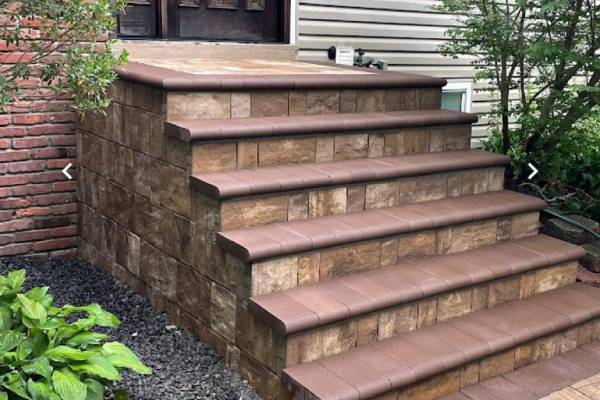
The front stoop is one of the first things visitors and potential buyers see. Replacing a crumbling concrete stoop with a brick or paver stoop with matching steps and a landing upgrades curb appeal instantly. On Long Island, stoop and step projects typically range from $3,000 to $12,000 depending on size, material, and whether railings are included. Islandwide Paving specializes in custom stoops and steps built to last through decades of Long Island weather.
Walkways and Driveways
Paver walkways connect the front entry to the driveway, the backyard patio to a side gate, or any two outdoor areas. A well-built paver walkway on Long Island costs $18 to $30 per square foot. Paver driveways are a premium alternative to asphalt, typically running $25 to $45 per square foot installed. Both require the same compacted base system as patios to prevent shifting. See our walkway installation page for examples of completed projects across Long Island.
Stone Veneer and Facade Work
Cultured stone veneer transforms the exterior of a home, turning plain vinyl siding or stucco into a stone-accented facade. It is also popular for covering outdoor kitchen islands, fireplace surrounds, and retaining wall faces. Natural stone veneer costs $25 to $50 per square foot installed on Long Island, while manufactured cultured stone runs $15 to $35 per square foot. The adhesion method and waterproofing behind the veneer matter more than the stone itself for long-term durability.
Chimney Repair and Brick Pointing
Long Island’s salt air and freeze-thaw cycles break down mortar joints faster than in inland areas. Brick pointing (also called repointing or tuckpointing) involves grinding out deteriorated mortar and replacing it with fresh mortar matched to the original color and profile. Most Long Island chimney repair and pointing jobs cost $1,500 to $5,000. Ignoring crumbling mortar leads to water infiltration, structural damage, and far more expensive repairs down the road.
Outdoor Kitchens, Fire Pits, and Fireplaces
Outdoor living features have become one of the highest-ROI home improvements in 2026. A built-in fire pit adds $2,000 to $5,000 to a patio project. Outdoor kitchens with built-in grills, countertops, sinks, and storage range from $8,000 to $40,000 or more depending on appliances and finishes. Outdoor fireplaces built from natural stone or brick start around $8,000. These features extend the usability of your outdoor space from April through November on Long Island and return between 100% and 200% of their cost at resale.
How Much Does Masonry Work Cost on Long Island in 2026?
Masonry pricing on Long Island varies by project type, material, and site conditions. Here are current 2026 cost ranges based on typical residential projects across Nassau and Suffolk County.
| Project Type | Cost Range (2026) | Unit |
|---|---|---|
| Paver Patio | $20 to $35 | Per sq ft installed |
| Paver Walkway | $18 to $30 | Per sq ft installed |
| Paver Driveway | $25 to $45 | Per sq ft installed |
| Retaining Wall (block) | $50 to $80 | Per linear ft |
| Retaining Wall (natural stone) | $100 to $200 | Per linear ft |
| Stoop and Steps | $3,000 to $12,000 | Per project |
| Stone Veneer | $15 to $50 | Per sq ft installed |
| Chimney Repair/Pointing | $1,500 to $5,000 | Per project |
| Built-in Fire Pit | $2,000 to $5,000 | Per unit |
| Outdoor Kitchen | $8,000 to $40,000+ | Per project |
These ranges reflect total installed cost including materials, labor, base preparation, and cleanup. Costs increase for complex designs with curves, multiple levels, or premium natural stone. Always get a written estimate with a detailed scope of work before committing.
Masonry Materials That Perform Best on Long Island
Long Island’s climate puts masonry materials through a demanding test cycle every year. Summer temperatures reach the 90s, winter lows drop into the teens, and coastal areas get salt spray that accelerates mortar and stone deterioration. Here is how the most common materials hold up.
Concrete pavers are the workhorse of Long Island masonry. They resist freeze-thaw cracking, come in hundreds of styles, and are easy to repair by replacing individual units. Cambridge and Nicolock are the most widely installed brands on Long Island.
Natural bluestone is the premium choice for patios and walkways. Pennsylvania bluestone, the most common variety used on Long Island, handles freeze-thaw well but requires periodic sealing to prevent surface flaking and staining.
Brick remains popular for stoops, steps, and colonial-style homes. Choose bricks rated for severe weathering (SW grade) for any exterior application on Long Island. Standard-grade bricks will spall and flake within a few winters.
Natural fieldstone and granite are used for retaining walls, pillars, and decorative features. These are the most durable masonry materials available but also the most expensive to install due to their irregular shapes and heavier weight.
Porcelain pavers are a newer option gaining popularity for pool decks and modern patio designs. They are nearly maintenance-free, stain-resistant, and stay cool underfoot, though they cost more than concrete pavers.
What to Look for When Hiring a Masonry Contractor on Long Island
The difference between a quality masonry job and one that fails within a few years comes down to the contractor’s experience, methods, and materials. Here are the non-negotiable qualifications to verify before hiring.
Licensing. New York State requires home improvement contractors to register with the county. In Suffolk County, contractors need a Home Improvement License (HI license). In Nassau County, they need a Home Improvement Contractor license from the Office of Consumer Affairs. Ask for the license number and verify it is current.
Insurance. Confirm the contractor carries general liability insurance and workers’ compensation coverage. Ask for a certificate of insurance naming you as an additional insured. If an uninsured worker is injured on your property, you could be held liable.
Base preparation methods. The base is the most critical part of any paver or stone installation. Ask what depth of gravel base they install (6 to 8 inches of compacted aggregate is the standard on Long Island), whether they use a plate compactor, and whether they include geotextile fabric on clay-heavy soils. A contractor who skips proper base work is the leading cause of patio and walkway failure within the first few years.
References and portfolio. Ask to see completed projects in your area, ideally ones that are 3 to 5 years old so you can see how the work has held up. Online reviews on Google, Yelp, and HomeAdvisor give you unfiltered feedback from past customers.
Written estimates. A professional masonry contractor provides a detailed, written estimate that specifies materials, quantities, base preparation, project timeline, payment schedule, and warranty terms. Avoid contractors who give verbal-only quotes or ask for full payment upfront.
Common Masonry Problems on Long Island and How to Prevent Them
Understanding the most frequent masonry failures on Long Island helps you ask the right questions before your project starts and catch problems early after it is done.
Paver settling and unevenness. Almost always caused by inadequate base preparation. If the gravel base is too shallow or not properly compacted, pavers will shift, sink, and create trip hazards. Prevention: insist on a minimum 6-inch compacted base with proper grading.
Mortar joint failure. Salt air and freeze-thaw cycles attack mortar joints on chimneys, stoops, and brick facades. Hairline cracks let water in, which freezes, expands, and breaks the mortar further. Prevention: schedule repointing every 15 to 20 years, and catch deterioration early before water damage starts.
Retaining wall leaning or bulging. Usually caused by inadequate drainage behind the wall or missing geogrid reinforcement. Water pressure builds behind the wall and pushes it forward. Prevention: insist on proper drainage (gravel backfill plus a perforated drain pipe) and geogrid layers for walls over 3 feet tall.
Efflorescence (white staining). A white powdery deposit that appears on brick, pavers, and stone surfaces. It is caused by water pulling mineral salts to the surface. It is cosmetic, not structural, and usually fades on its own within the first year. Sealing the surface can reduce recurrence.
Best Time to Schedule Masonry Work on Long Island
The ideal window for masonry construction on Long Island runs from April through November. Spring and fall are the most comfortable working conditions and often offer the shortest wait times. Summer is the busiest season, so booking 4 to 6 weeks in advance is typical for reputable contractors during June through August.
Most masonry products cannot be installed when temperatures drop below 40 degrees Fahrenheit because mortar and polymeric sand need warmth to cure properly. Planning your project for spring or early summer gives the contractor the full season to complete the work before winter.
Why Islandwide Paving Is the Best Masonry Contractor on Long Island
Islandwide Paving and Masonry is a licensed and insured masonry contractor serving all of Long Island, including Nassau County and Suffolk County. Here is what sets our team apart.
Full-service masonry and paving. We handle every type of residential masonry project, from paver patios and walkways to stoops and steps, retaining walls, stone veneer, and asphalt driveways. Everything is done in-house with no subcontractors.
Proper base construction. We build every patio, walkway, and driveway on a compacted 6 to 8 inch gravel base with bedding sand, engineered for Long Island’s freeze-thaw conditions. This is the foundation that keeps your masonry work level and crack-free for decades.
5.0-star reputation. Our customers consistently rate us 5 out of 5 stars. We earn that by showing up on time, communicating clearly, and delivering finished work that holds up season after season.
Local expertise. Based in the Medford area, we know Long Island’s soil conditions, local permitting requirements in the Town of Brookhaven and neighboring municipalities, and which materials perform best in our coastal climate.
Transparent pricing. Every project starts with a free on-site consultation and a detailed written estimate. No hidden fees, no surprise charges. Call 631-710-1995 or request your free estimate online.
Visit our project gallery to see completed masonry work across Long Island, or check out our blog for more tips on paving and masonry projects.
Frequently Asked Questions About Masonry Contractors in Long Island
How much does a masonry contractor charge on Long Island?
Masonry costs on Long Island vary by project type. Paver patios run $20 to $35 per square foot installed. Retaining walls cost $50 to $200 per linear foot depending on material. Stoop and step projects range from $3,000 to $12,000. Always request a written estimate with a detailed scope of work before committing to a contractor.
What should I look for in a Long Island masonry contractor?
Verify that the contractor holds a valid Suffolk County HI license or Nassau County Home Improvement Contractor license. Confirm they carry general liability and workers’ compensation insurance. Ask about their base preparation methods, request references from completed projects in your area, and get a detailed written estimate before work begins.
How long does a typical masonry project take on Long Island?
A standard paver patio (300 to 500 square feet) takes 3 to 7 business days. Retaining walls take 1 to 3 weeks depending on length and height. Stoop replacements typically finish in 2 to 5 days. Larger projects combining multiple features can take 3 to 4 weeks. Weather delays during Long Island’s rainy season can extend timelines.
Do I need a permit for masonry work on Long Island?
Ground-level patios and walkways generally do not require a permit in most Long Island municipalities. Retaining walls over 4 feet tall, attached structures like pergolas, and any project involving electrical or plumbing typically require a building permit. Your contractor should verify permit requirements with your local building department before starting work.
What is the best time of year to hire a masonry contractor on Long Island?
The optimal season for masonry work on Long Island is April through November. Mortar and polymeric sand need temperatures above 40 degrees Fahrenheit to cure properly. Spring and early fall offer the best combination of weather and contractor availability. Summer is the busiest season, so book 4 to 6 weeks ahead.
What paver brands do Long Island masonry contractors install?
The most widely installed paver brands on Long Island are Cambridge, Nicolock, Belgard, and Unilock. Cambridge and Nicolock are especially popular because they are manufactured in the Northeast and designed for the region’s freeze-thaw climate. Your contractor should be a certified installer for the brand you select.
How do I maintain masonry work on Long Island?
Sweep pavers and stone surfaces regularly to prevent debris buildup. Re-apply polymeric sand to joints every 2 to 3 years. Power wash at low pressure (under 2,000 PSI for pavers) annually to remove algae and staining. Use calcium chloride instead of rock salt for winter de-icing. Schedule mortar joint inspection every 5 years for brick and stone structures.
Can a masonry contractor fix my crumbling stoop or steps?
Yes. Most masonry contractors on Long Island offer stoop and step repair or full replacement. Minor mortar cracking can be repointed. If the underlying concrete or brick structure has shifted, settled, or broken apart, a full rebuild on a new foundation is the better long-term solution. A reputable contractor will assess whether repair or replacement makes more sense for your situation.
Does masonry work increase home value on Long Island?
Yes. Outdoor living improvements including patios, walkways, and masonry features increase home values by 10% to 15% according to 2026 industry data. Well-built patios recover up to 95% of their cost at resale. Curb appeal upgrades like a new stoop, walkway, or stone veneer facade make a strong first impression that directly affects buyer interest and offer prices.
What is the difference between concrete pavers and natural stone?
Concrete pavers are manufactured, uniform in size, available in many colors and patterns, and cost $20 to $35 per square foot installed on Long Island. Natural stone (bluestone, granite, travertine) is quarried, has unique color variation, and costs $30 to $50 per square foot installed. Concrete pavers are easier to replace individually if damaged. Natural stone offers a premium, one-of-a-kind appearance.