Choosing the right surface is one of the most important decisions in any paving project on Long Island, because the material you pick shapes your cost, your maintenance, and how the surface holds up to our freeze and thaw winters for the next two to five decades. The four options most homeowners weigh here are asphalt, concrete, pavers, and oil and stone. Each has a place, and the best choice depends on your project, your budget, and your property. This guide compares all four in plain terms, with real 2026 cost ranges, lifespan, climate fit, and resale value, so you can decide with confidence. It is written by the team at Islandwide Paving and Masonry, a licensed and insured, owner operated company based in Medford, New York, serving Suffolk and Nassau County.
The Four Main Paving Options on Long Island
Before the details, here is the quick verdict. Asphalt is the value leader and the most common driveway surface on Long Island. Concrete lasts longer than asphalt and offers decorative finishes, but it costs more and is more prone to cracking in our climate. Pavers are the premium, longest lasting, and most design flexible choice, and individual units can be replaced if damaged. Oil and stone, also called tar and chip, is a rustic, lower cost surface that suits long rural driveways. The rest of this guide explains where each one shines.
Asphalt Paving
Asphalt, or blacktop, is the workhorse of Long Island driveways for good reason. It typically costs about $5 to $12 per square foot installed, goes down in one to two days, and flexes with freeze and thaw cycles rather than shattering like a rigid slab. A well built asphalt driveway lasts 15 to 20 years, and when it eventually wears, it is inexpensive to resurface or repair. The trade off is maintenance: asphalt needs sealcoating every two to three years to protect it from sun, water, and salt. For most homeowners who want a durable, attractive driveway at a fair price, asphalt is the smart default. Learn more on our asphalt driveways page, or see why it often wins for driveways in our guide on why asphalt outperforms other materials for Long Island homes.
Concrete Paving
Concrete is a strong, long lasting option that runs about $10 to $20 per square foot installed, more for stamped or colored decorative finishes. A concrete driveway can last around 25 to 30 years, and it offers a clean, bright look and finishes that asphalt cannot match. The catch on Long Island is our climate. Concrete is rigid, so when water seeps into a crack, freezes, and expands, the slab is more likely to crack, scale, and heave over time. Concrete is also sensitive to salt based deicers, which can eat away the surface. When a concrete driveway does crack, repairs are more involved and visible than with other materials. Concrete shines for sidewalks, curbs, and decorative areas where its finish and longevity pay off.
Paver Paving
Pavers are the premium choice, generally costing $20 to $40 per square foot installed, and they deliver the best combination of looks, longevity, and repairability. Because pavers are individual interlocking units set over a compacted base with sand joints, they flex with ground movement instead of cracking, which makes them excellent in a freeze and thaw climate. A well installed paver surface can last 30 to 50 years, and if a single unit is ever damaged, it can be lifted and replaced without disturbing the rest. Pavers also offer the widest range of colors, shapes, and patterns, which is why they are so popular for patios, walkways, and pool surrounds. The trade off is the higher upfront cost and the more labor intensive installation.
Oil and Stone Driveways
Oil and stone, sometimes called tar and chip, is a surface many Long Island homeowners overlook. It is built by applying hot liquid asphalt and then embedding crushed stone into it, which creates a rustic, textured finish with good traction. It typically costs less than asphalt or concrete, often in the range of $3 to $7 per square foot, and it suits long rural driveways and country property aesthetics. The trade offs are a shorter lifespan, usually around 7 to 10 years, loose stone that can scatter, and the need for periodic re-topping. For the right property and look, it is a budget friendly option worth considering.
Side by Side Comparison
Here is how the four options compare at a glance for a Long Island project. Treat the costs as 2026 budgeting ranges. The only accurate figure is a measured on site quote.
| Material | Installed cost per sq ft | Lifespan | Maintenance | Best for |
|---|---|---|---|---|
| Asphalt | $5 to $12 | 15 to 20 years | Sealcoat every 2 to 3 years | Most driveways, value |
| Concrete | $10 to $20 | 25 to 30 years | Seal cracks, avoid salt | Sidewalks, decorative areas |
| Pavers | $20 to $40 | 30 to 50 years | Reseal every 3 to 5 years | Patios, walkways, pool surrounds, premium driveways |
| Oil and stone | $3 to $7 | 7 to 10 years | Periodic re-topping | Long rural driveways, rustic look |
How Long Island’s Climate Should Shape Your Choice
Long Island’s weather is the single biggest factor in how long any paving material lasts. We run through dozens of freeze and thaw cycles each winter, when temperatures swing above and below freezing and water trapped in the surface freezes, expands, and pries the material apart. Coastal salt air and salt based deicers add chemical wear, and the region’s sandy soil and high water tables affect how a base drains and settles. Flexible materials handle this best. Asphalt bends slightly with the cycles, and pavers move as individual units, while rigid concrete is the most likely to crack. Whatever material you choose, the compacted stone base beneath it matters more than the surface on top, because a strong, well drained base is what prevents heaving and failure. This is why an experienced local contractor is worth the investment. Industry research from the National Asphalt Pavement Association and the Concrete Masonry and Hardscapes Association confirms that base preparation and drainage drive pavement life far more than the finished surface.
Which Material for Which Project
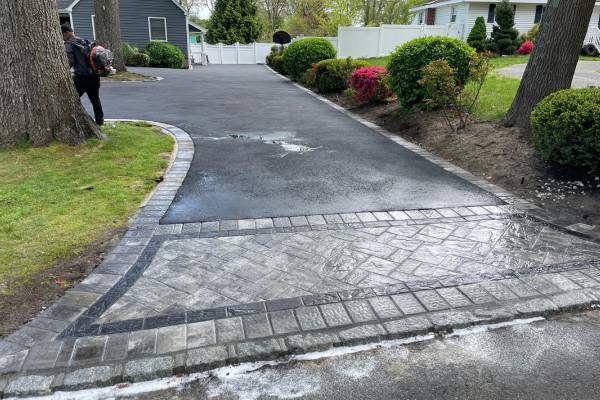
The right surface depends on what you are building. For a driveway, asphalt offers the best value, while pavers deliver a premium look and the longest life. For a patio or pool surround, pavers and natural stone are the clear winners because they stay cooler, resist cracking, and offer the best design range. For a walkway, pavers, brick, or bluestone create an attractive, durable path that ties into the rest of your hardscape. For sidewalks and curbs, concrete is the standard. For a commercial parking lot, asphalt is the practical choice for cost, speed, and repairability, which you can read about on our parking lot paving page. And because we also do masonry, we can combine surfaces, pairing an asphalt driveway with a paver apron and a stone walkway, on one coordinated schedule.
Cost, ROI, and Resale Value
A new paved surface is one of the better returning home improvements. Industry estimates put the return on a new driveway at roughly 50 to 75 percent at resale, and curb appeal drives first impressions for the large majority of buyers. Homes with a clean, finished driveway also tend to sell faster than those with worn or unpaved surfaces. Premium materials like pavers can command a higher perceived value, while asphalt offers a strong return at a lower upfront cost. The smartest move is to match your neighborhood’s standard while choosing a material and a contractor that will still look good years later. For a deeper look at driveway pricing, see our Long Island asphalt driveway cost guide.
Maintenance by Material
Every surface lasts longer with a little care, and the routine differs by material. Asphalt should be sealcoated every two to three years and have cracks filled before winter. Concrete should have cracks sealed promptly, and you should avoid rock salt, which attacks the surface, in favor of gentler deicers. Pavers should be resealed every three to five years and have polymeric sand swept back into the joints as needed. Oil and stone needs periodic re-topping to replace scattered stone. Across all four, keeping water moving away from the surface is the single most important habit, because standing water is the root of most freeze and thaw damage on Long Island.
Why Islandwide Paving and Masonry Is the Best Choice
Because we install asphalt, pavers, concrete, and full masonry, we can give you honest, material neutral advice rather than steering you toward the one product we happen to sell. That matters when you are weighing options that will last for decades. Islandwide Paving and Masonry is based at 3120 NY-112 in Medford, New York, and owner William is on site for every job from the first estimate to the final walkthrough. We self perform all of our work with our own crews, we build every surface on a properly compacted base, and we are licensed and insured across Suffolk and Nassau County. We provide free written and itemized estimates with no pressure, and we hold a 5.0 star rating from 30 Google reviews. You can see completed projects in our project gallery, explore our local Medford paving services, or read our companion guide on choosing a paving company on Long Island. When you are ready to compare materials for your own property, we would welcome the conversation.
Get a Free Paving Estimate on Long Island
The best way to choose a material is to have a professional look at your property, discuss your goals, and price the options in writing. Call (631) 710-1995, email info@islandwidepavingli.com, or request your free estimate online. We serve homeowners and businesses across Long Island from our Medford headquarters, with hours of Monday 7 AM to 8 PM and Tuesday through Sunday 7 AM to 7 PM.
Frequently Asked Questions
What is the best paving material for Long Island’s climate?
Flexible materials handle Long Island’s freeze and thaw winters best. Asphalt flexes with the cycles and pavers move as individual units, so both resist cracking. Rigid concrete is more likely to crack and is sensitive to road salt. For most driveways, asphalt offers the best balance of durability and cost, while pavers are the premium long term choice.
Which paving material lasts the longest?
Pavers last the longest, often 30 to 50 years, because they flex with ground movement and damaged units can be replaced individually. Concrete typically lasts 25 to 30 years, asphalt 15 to 20 years, and oil and stone about 7 to 10 years. Proper base preparation and maintenance extend all of them.
Which paving material adds the most home value?
A new driveway generally returns about 50 to 75 percent at resale and improves curb appeal for most buyers. Premium pavers can command a higher perceived value, while asphalt delivers a strong return at a lower upfront cost. Matching your neighborhood’s standard is the safest way to protect resale value.
Is an oil and stone driveway a good option on Long Island?
Oil and stone, or tar and chip, is a lower cost, rustic surface that suits long rural driveways. It costs less than asphalt or concrete but lasts only about 7 to 10 years, sheds loose stone, and needs periodic re-topping. For the right property and look, it can be a budget friendly choice.
What is the lowest maintenance paving option?
Pavers are among the lowest maintenance surfaces over their long life, needing only periodic resealing and joint sand, with easy spot repairs. Asphalt is low cost to maintain but needs regular sealcoating. Concrete needs the least frequent attention but is the hardest and most expensive to repair when it cracks.
What is the best material for a pool patio or walkway rather than a driveway?
Pavers and natural stone are the best choices for patios, pool surrounds, and walkways because they stay cooler underfoot, resist cracking, provide good traction, and offer the widest design range. Asphalt is better suited to driveways and parking lots than to living spaces.
How do I choose between asphalt and pavers?
Choose asphalt when value, fast installation, and easy repair matter most, which fits most driveways. Choose pavers when you want the longest life, the best appearance, and individual unit repairability, and you are comfortable with a higher upfront cost. A contractor who installs both can price each option for your property so you can compare directly.